

 7-Aug-26 5 min. read
What Is Enclosed Car Transport?
Learn how enclosed vehicle transport works and when a covered trailer is worth considering for classic, luxury, or low-clearance vehicles.
Read our cost guide Proudly American
Enclosed transport includes a covered trailer and secure wheel restraints. Many trailers also use hydraulic liftgates for low-clearance vehicles. The service protects the car from normal weather exposure during highway travel. It does not remove the need for insurance checks or condition inspections.
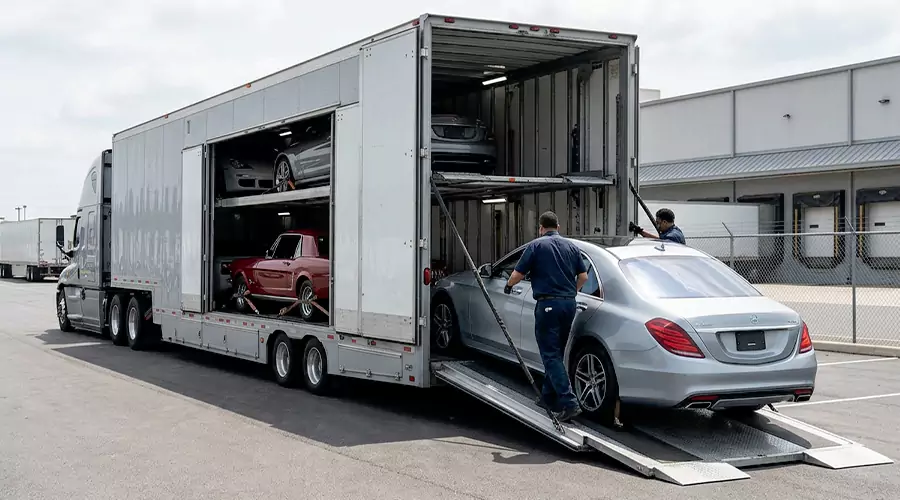
The trailer has a roof and side walls. A rear door closes after loading. Hard-sided units use rigid panels while soft-sided units use reinforced fabric over a steel frame.
Enclosed auto transport usually carries fewer vehicles than an open hauler. This lower capacity allows more space between cars. It can also reduce the number of loading stops during the route, which is beneficial for trailer shipping involving valuable vehicles.
Wheel straps secure the vehicle without attaching chains to its body. Many specialty carriers use soft straps around the tires. This setup reduces contact with the frame or suspension.
Some units include air-ride suspension. This feature can soften vibration on rough pavement. Climate control may be available in specialist trailers but it is not standard across the enclosed market.
Covered car shipping does not mean the car cannot move inside the trailer. Proper loading remains necessary. The driver must place the vehicle correctly and confirm that every restraint is tight.
The process starts with an accurate vehicle description and a written estimate. A carrier is then assigned to the shipment. The driver inspects the car before loading it inside the trailer. A second inspection takes place at delivery before the owner signs the final document.
The estimate should include the year and model. It should also state whether the vehicle runs.
Tell the transporter about low ground clearance. Report wide tires or body modifications before dispatch. A trailer selected for factory measurements may not fit a modified car.
Ask whether the trailer is hard-sided or soft-sided. Both provide more protection than an open carrier. However, rigid walls offer better impact resistance than fabric panels.
A covered car transport service should also explain the loading method. Vehicles with very low clearance often need a liftgate instead of loading ramps.
Interstate brokers and carriers must register with the Federal Motor Carrier Safety Administration. Both receive an MC number. Interstate carriers also receive a USDOT number.
Check the legal business name through the federal carrier search. The company on the truck should match the assigned carrier named in your paperwork.
Wash the exterior before pickup. Dirt can hide scratches or paint chips.
Take photographs from every side in good light. Record close images of existing damage. Photograph the odometer as well.
The driver will document the starting condition on the bill of lading. Review each marked area before signing.
The driver moves the vehicle onto the liftgate or ramp. Wheel straps hold the car in place during transit.
Low-clearance cars benefit from a hydraulic lift because the loading platform stays level. A steep ramp can scrape a front splitter or underbody panel.
Inspect the car before signing the delivery section. Compare its condition with the pickup photographs.
Record any new damage on the bill of lading. Take clear photographs while the vehicle remains near the trailer.
Enclosed trailers fall into two main categories. Soft-sided trailers use reinforced fabric around a metal frame. Hard-sided trailers use rigid walls and a solid roof. Single-car units offer the most private setup but often cost more than multi-car enclosed transportation.
| Trailer type | Protection level | Typical capacity | Best use |
|---|---|---|---|
| Soft-sided enclosed | Strong weather protection | Two to six vehicles | Luxury or restored cars |
| Hard-sided enclosed | Maximum exterior protection | Two to six vehicles | Exotic or museum-quality cars |
| Single-car enclosed | Private trailer space | One vehicle | Rare or irreplaceable cars |
| Multi-car enclosed | Full coverage at lower cost | Two to six vehicles | Long-distance specialty shipping |
Soft-sided trailers block rain and most road dirt. Their fabric panels do not provide the same impact barrier as rigid metal walls.
Hard-sided units provide the strongest exterior shell. Some include padded interiors or air-ride equipment. These features make them useful for delicate finishes.
A covered car transport trailer can still differ in loading angle. Ask for a liftgate when the vehicle has four inches of clearance or less. Extra Space Storage identifies very low clearance as a reason to consider enclosed service.
Single-car trailers reduce contact with other vehicles. However, they have higher operating costs per shipment. Multi-car units are more common for longer routes.
The insider tip is to request actual trailer photographs before booking. A sales representative may use “enclosed” as a broad term. A photograph confirms the wall material and loading equipment.
Enclosed shipping usually costs 30% to 60% more than open transport in 2026. A 500-mile shipment often costs $900 to $1,400. A 1,000-mile move can cost $1,100 to $1,700. Coast-to-coast prices can exceed $2,500.
| Shipping distance | Open transport estimate | Enclosed transport estimate | Added enclosed cost |
|---|---|---|---|
| About 500 miles | $600 to $900 | $900 to $1,400 | $300 to $500 |
| About 1,000 miles | $800 to $1,100 | $1,100 to $1,700 | $300 to $600 |
| About 1,500 miles | $950 to $1,300 | $1,400 to $2,000 | $450 to $700 |
| More than 2,000 miles | $1,100 to $1,500 | $1,600 to $2,500 or more | $500 to $1,000 or more |
These estimates apply to standard operable vehicles. Large SUVs can cost more because they use extra trailer space.
The enclosed car transport cost also changes with the trailer design. A single-car hard-sided unit usually costs more than a multi-car soft-sided trailer.
Current enclosed car shipping rates rise during busy moving periods. Limited trailer availability can also increase the price for urgent pickup. Extra Space Storage recommends booking two to three weeks ahead because fewer enclosed carriers operate nationwide.
An inoperable vehicle can require extra equipment. A locked wheel creates a harder loading problem than a dead battery.
The covered car transport cost should include the complete payment amount. Review the broker deposit and the remaining carrier balance. Ask whether card fees are added.
Online enclosed car shipping quotes should identify the trailer type. A price based on soft-sided transport cannot be compared directly with a single-car hard-sided service.
Enclosed shipping is worth considering when minor exterior damage could cause a large repair bill. It also makes sense for low-clearance vehicles that cannot use standard ramps. Most ordinary sedans remain suitable for open shipping because open carriers handle everyday vehicles at a lower price.
Consider enclosed service when the vehicle has:
A luxury car transport service should not be selected by vehicle price alone. Loading clearance and repair difficulty matter as much as market value.
The enclosed car shipping cost may not be justified for a standard commuter. Open transport usually provides acceptable protection for daily-use cars.
The key comparison is the added shipping charge against the possible repair loss. Spending $600 more can make sense when a damaged splitter would cost several thousand dollars.
Warning signs include missing federal registration and unclear trailer details. A quote should identify whether the company is a broker or carrier. The written agreement should also state the vehicle condition and payment schedule. Stop when the pickup paperwork shows a different company or total price.
Claims about the best enclosed auto transport option should not replace federal verification. Marketing language cannot confirm operating authority.
The best enclosed car transport companies should explain the equipment before pickup. They should also provide a written condition process.
You can perform a five-minute transport check before releasing the vehicle. Verify the carrier’s federal record and inspect the trailer. Confirm the loading equipment. Compare the bill of lading with the written agreement. Stop the pickup when any important detail does not match.
Start by searching the MC number through FMCSA. Confirm the legal name and operating status.
Walk around the trailer before loading. Look for a complete roof and closed side panels. Confirm whether the walls are rigid or fabric.
Ask the driver to show the liftgate when the car has low clearance. A loading ramp may not match the service described during booking.
Review the wheel-restraint method. Soft tire straps should secure the vehicle without rubbing against painted panels.
Compare the total payment with the bill of lading. The number should match the signed agreement.
The term enclosed car transport interstate should mean the assigned business has federal authority. A state business registration alone does not confirm interstate operating status.
Contact a specialist when the car has very low clearance or cannot move under its own power. Professional review is also useful for rare vehicles with unusual dimensions. The transporter should confirm trailer fit and loading equipment. It should also explain insurance limits before booking.
Ask for professional guidance when the car has a long front overhang. This shape can cause contact with a steep ramp.
A modified suspension also needs review. Lowering springs can reduce clearance below the number shown in factory specifications.
Compare enclosed car shipping companies using equipment details and federal records. Reviews can add context but they should not replace registration checks.
Reputable enclosed car transport companies should ask about the vehicle’s condition. A quote issued without the model or clearance may not remain accurate.
Request the assigned carrier’s cargo insurance certificate. Check the policy dates and per-vehicle limit.
Professional handling does not remove your responsibility at pickup. Photograph the vehicle and review the bill of lading before signing.
Prevent damage by cleaning the car and documenting its condition before pickup. Prevent extra charges by reporting the correct dimensions. Remove loose accessories and confirm the trailer in writing. Review the payment schedule before dispatch. Repeat the condition inspection as soon as the vehicle arrives.
Use this preparation schedule:
Leave about one-quarter of a tank of fuel. The driver needs enough fuel for loading. Extra fuel adds weight without improving the shipment.
Remove removable spoilers when the manufacturer permits it. Fold mirrors when the design allows. Give the driver written instructions for unusual controls.
Confirm whether the covered car shipping agreement includes a hard-sided or soft-sided trailer. The difference should appear in writing.
Do not place household goods inside the car unless the carrier allows them. Personal items can shift during travel. They may also fall outside the carrier’s damage coverage.
Enclosed car transport protects vehicles inside a covered trailer and commonly costs 30% to 60% more than open shipping. The added price makes the most sense for rare cars or low-clearance models. Verify federal registration and confirm the trailer type before pickup. This week, measure the vehicle’s clearance and request written equipment details from each transporter you compare.
7-Aug-26 5 min. read
Learn how enclosed vehicle transport works and when a covered trailer is worth considering for classic, luxury, or low-clearance vehicles.
Read our cost guideNeed Help?
One call solves it all.